
In the Event of an Event: Why You Should Care if You’re New to Events Marketing
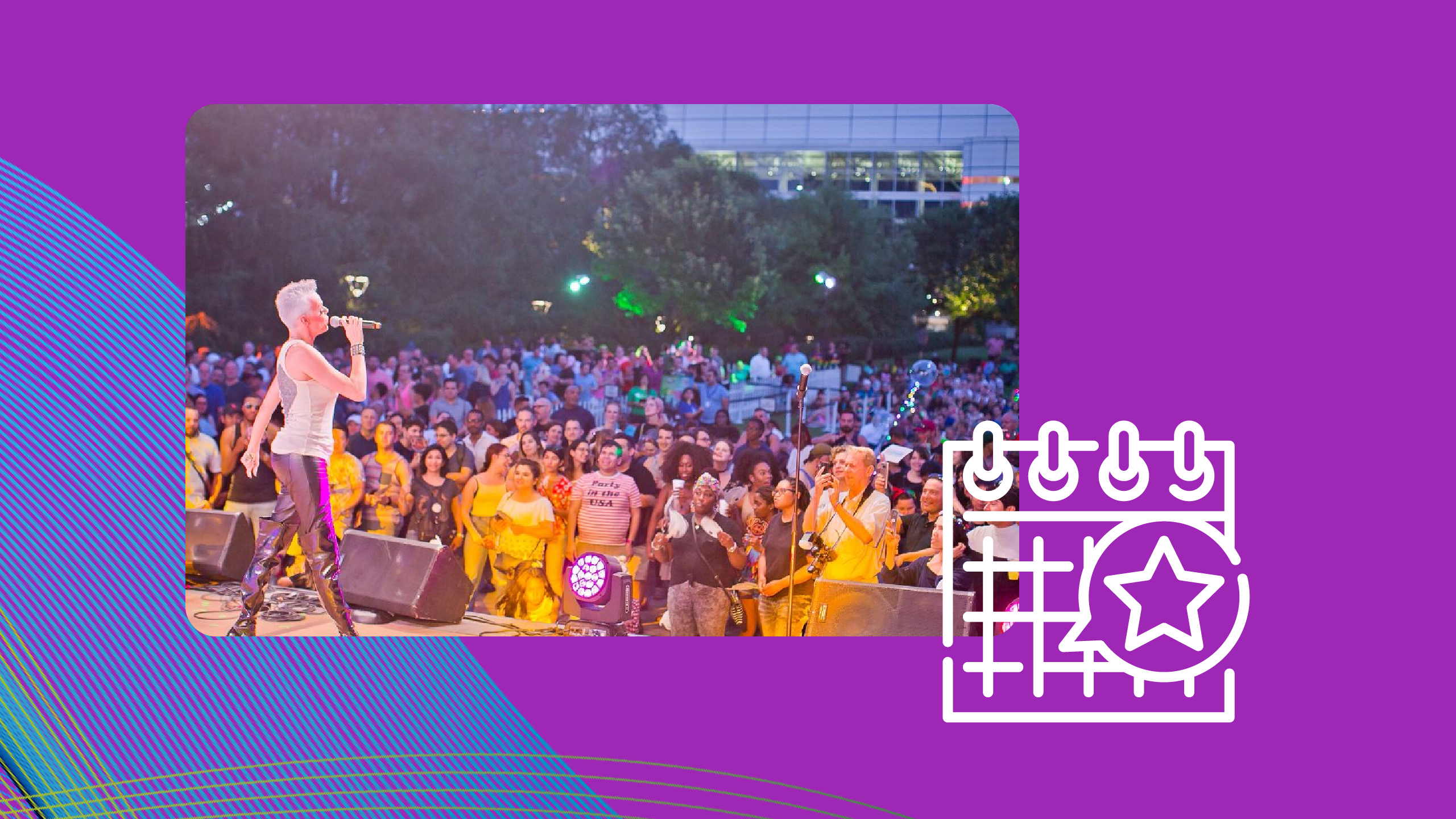
Trends in marketing shift every year. Whether it’s the platforms where audiences flock or the type of content that fits current algorithms, communications pros need to evolve with these changes. While these various strategies fit most communications plans, one area has maintained its relevance through the times: event marketing.
While digital marketing keeps growing, live events continue to drive some of the most meaningful business and brand connections. According to a 2023 Bizzabo study, 80% of marketers believe live events are critical to their company’s success. That’s not a fluke; that’s strategy.
Consider these real-world stats about event marketing:
- Nearly two-thirds of Gen Z finds business events relevant to them, with almost half saying that interest has risen since the COVID-19 pandemic (Convene Digital).
- 74% of event attendees say they have a more positive opinion about a company after an event (EMI & Mosaic).
- Small businesses engaging in community events witness significant benefits – a small bakery saw a 40% surge in sales within the following month, attributed directly to the visibility and customer interactions at the event. (Social Targeter)
In a world flooded with digital noise, events cut through. They create real-life touchpoints that foster trust, loyalty, and community. Whether it’s a pop-up shop or an industry panel, well-executed events help brands stand out and audiences feel seen.
In this post, we’ll walk you through the core fundamentals of event marketing and explain why it’s still effective for small business owners, entry-level marketers, and entrepreneurs who want to create powerful, budget-friendly events that move the needle.
Your Beginner’s Guide to Event Marketing
From concept to follow-up, here’s a 5-step guide on how to turn your event idea into a buzz-worthy brand moment—using strategy and smarts to make a splash.
1. So, when is an event worth planning?
Let’s face it. There’s a different level of excitement that comes from an in-person event when compared to a screen. It creates a tangible experience that buzzes with energy, curiosity, and connection. Events can spotlight your brand in ways ads simply can’t: generating visibility, building loyalty, capturing leads and—as a bonus—creating a treasure trove of content you can slice, dice, and repurpose later. Imagine a local coffee shop that started a “Coworking & Coffee” morning event series. The business not only turned empty weekday hours into a buzzing hub for remote work but also found a source of content for its wider audience.
2. Who’s going to show up and what kind of event makes sense?
Here’s where being specific pays off. Don’t just say “everyone’s welcome” and hope for the best. Figure out exactly who should be in the room (or on the Zoom). Think local customers who already know your name, industry peers who speak your language, influencers who can amplify your voice, and media who can make it echo. When you define your audience clearly, designing an experience that actually matters to them becomes a whole lot easier. Vague invites get vague results. Precision builds connection.
Not every event needs to be a glitzy gala. Start by reverse-engineering from your goal. Launching something new? Try a pop-up demo. Want to nurture your community? Host a free, hands-on workshop. Chasing leads? Webinars or panels give you insight and email addresses. Trying to build brand awareness? Hitch a ride with a local festival where the audience is already warmed up. Your format should follow function like picking the right playlist for the mood you want to create.
3. How do you plan without breaking the budget?
Yes, the budget. Less “where dreams go to die” and more “where good ideas get real.” Start with the basics: venue, food and drink, marketing, speakers or performers, and equipment like lighting and AV. Then—and we cannot stress this enough—add a 10–15% contingency. Because something will go sideways (looking at you, last-minute weather changes). Use smart tools like Eventbrite’s budget templates or Capterra to map things out. Budgeting well doesn’t limit your creativity. It protects it.
Here’s the good news: you don’t need a Super Bowl ad to get attention. Start with the free stuff: your social channels, email lists, local community boards. Use scrappy-but-mighty tools like Canva for graphics, Mailchimp for outreach, and Instagram Reels for buzz-building. Pro tip: partner up. Picture a local yoga studio teaming up with a smoothie bar to host a wellness weekend. One email blast later, both businesses could double the crowd and halve the effort. “Synergy” sounds corporate, but when it works, it works.
Think of partnerships as a way to widen your reach, cut your costs, and deliver more value to your audience. But here’s the key: don’t just partner for the sake of it. Find someone whose brand complements yours. A boutique fashion store + a local jeweler = an experience that’s more than the sum of its parts. Your guests get variety. You get shared exposure. Everyone wins.
4. What should you track (besides how good the snacks were)?
Measuring success isn’t just a checkbox—it’s how you get better. Track attendance to see who actually came. Monitor social media to catch the ripples. Capture sales or leads to prove ROI. Send out post-event surveys to learn what worked and what didn’t. And watch for media or influencer mentions to gauge your brand’s afterglow. Tools like Google Forms and social analytics make this easy. Think of data as your event’s highlight reel—it helps you replay, refine, and repeat.
5. Rookie mistakes to avoid and a Beginner’s Checklist
You know that nightmare where everything goes wrong? That’s preventable with planning. Create a clear timeline and stick to it. Don’t underestimate logistics. Yes, even the boring stuff like parking signs and microphone batteries. Always (we repeat: always) have a backup plan. And don’t ghost your attendees after the confetti falls. A thank-you note or post-event recap can turn casual guests into loyal fans.
Don’t just pack up your banners and call it a day. The real value of an event lives on in the content you create, the relationships you nurture, and the brand story you keep telling. Repurpose photos and videos for your feed. Share testimonials. Follow up with attendees through email and socials. And offer special perks to make them feel like insiders. Momentum isn’t magic—it’s just smart follow-through.
The event world moves fast, but there are resources to help you stay at the forefront. Use this checklist to jumpstart your event marketing strategy.
Take the first step.
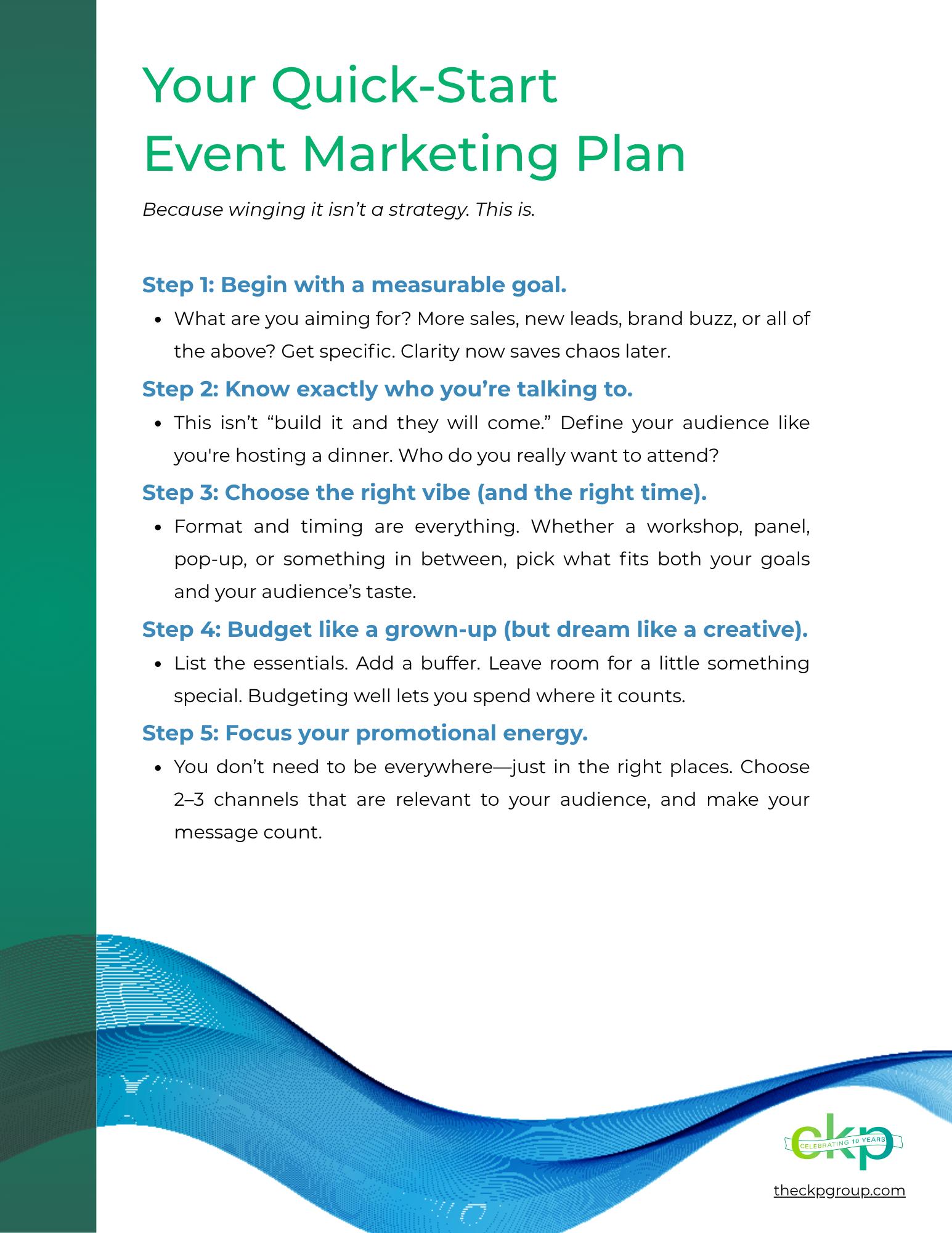 Utilize our Event Planning Checklist to turn your event marketing into impact. At CKP, we help organizations sharpen their communications, PR, and marketing approach with our 90-Day Navigator.
Want to turn your “Where do I start,” into “Let’s do this,”? Contact us to start your 90-Day Navigator today.
Because great events don’t just happen. They’re built.

Colin is a positive, solutions-oriented communicator supporting CKP clients through PR and experiential marketing. A former educator, he brings creativity and care to his work while pursuing passions like a cappella, live music, model building, and animal welfare advocacy.
More Blog Posts
Procter & Gamble launched a beauty campaign in 2025 starring virtual influencers—computer-generated avatars with perfect skin. Beauty shoppers weren't interested...
Discover how “flooding the zone” works in reputation management—beyond crisis PR—to shape narratives, build credibility, and protect brand trust.
Remember when "SEO" meant stuffing your website with keywords and calling it a day? Those days are gone, because Google's...

Let’s be real—communication at work is kind of like a group chat. Some people over-share, some barely respond, and others...
